
🧠 What Is Seed Germination?
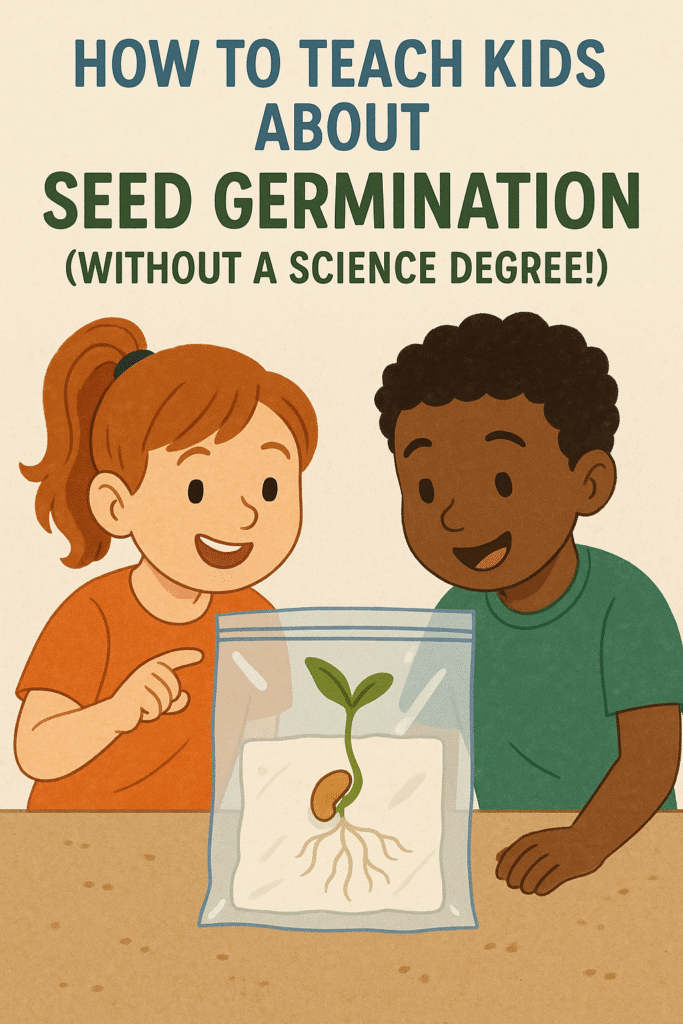
Seed germination is the process by which a seed wakes up and begins to grow into a plant. It starts when the seed absorbs water and ends when the first little root (called the radicle) pokes out into the soil.
It’s nature’s magic trick—tiny, invisible changes happening under the soil that turn into something big, green, and growing.
✋ Why It’s a Perfect Lesson for Kids
Teaching seed germination:
- Builds curiosity about science and nature
- Connects directly to gardening, sustainability, and food education
- Can be observed in just a few days
- Works in classrooms, homeschool spaces, libraries, and kitchens
And the best part? You don’t need fancy tools or a background in biology—just a few seeds, some patience, and a place to observe.
🧪 Simple Germination Experiment
Here’s an easy way to teach germination using items you probably already have:
📦 Materials:
- Dried beans (lima, kidney, black beans, etc.)
- Clear plastic sandwich bags
- Paper towels
- Tape
- Water
- Sunny window
🧾 Instructions:
- Wet a paper towel and fold it so it fits inside a sandwich bag.
- Place 2–3 dry beans between the paper towel and the inner surface of the bag (so kids can see them).
- Seal the bag and tape it to a sunny window.
- Watch over the next 5–7 days. Keep the towel damp.
- Optional: Have students draw what they observe each day.
🌱 The Science (in Kid-Friendly Language)
Here’s how you might explain the process to a child:
“Inside every seed is a baby plant waiting for the right conditions. When a seed gets enough water and warmth, it wakes up and starts to grow. The first thing that comes out is a little root that grabs onto the soil. Then a tiny stem stretches up toward the light. Soon you’ll see leaves—and that’s when your plant really starts growing!”
Use terms like:
- Seed coat – the outer shell that protects the baby plant
- Radicle – the first root that appears●
- Sprout – the young plant, just after it emerges
- True leaves – the second set of leaves, which look like the adult plant
📚 Book Pairing for Storytime
Pair your seed lesson with a related read-aloud to make the science stick:
- A Rescue Feast by Kathryn LaCombe (coming soon) – Features seed-starting in egg cartons, tomato plant growth, and garden-to-kitchen rescue
- The Tiny Seed by Eric Carle – A visual exploration of a seed’s journey
- From Seed to Plant by Gail Gibbons – A nonfiction favorite for classrooms
- A Seed Is Sleepy by Dianna Aston – Poetic and rich with botanical vocabulary
📓 Classroom & Homeschool Extensions
- Journal Prompt: “What do you think happens inside a seed before it sprouts?”
- Art Project: Create a labeled diagram of a seed with its parts (drawn or cut and paste).
- Math Connection: Measure root length each day and chart the growth.
- SEL Link: Talk about how growth takes time and care—just like us!
🌻 Bonus Activity: Seed Sorting Station
Let kids explore different types of seeds—sunflower, pumpkin, bean, tomato—and group them by size, color, or shape. Discuss what plants they might grow into.
🧺 Pro tip: Include rescued seeds from fruits and vegetables used in your kitchen (like apple or bell pepper seeds) to tie into food rescue themes!
💡Final Thoughts
You don’t need a lab coat to bring science to life. Just a bean, a window, and a child’s sense of wonder.
Seed germination is the perfect way to show how life begins, how plants feed us, and how we can care for what grows—both in the garden and in our communities.
📥 Free Download for Educators
Grab your printable PDF:
“Seed Germination Activity Sheet + Growth Journal Template”
Perfect for classrooms, homeschoolers, and after-school programs.
Download Now →